 Рус
Рус Укр
Укр Ar
Ar Cn
Cn Cr
Cr Bg
Bg Bo
Bo Fr
Fr It
It Es
Es Hu
Hu Hi
Hi Mo
Mo Ro
Ro Sb
Sb De
De Eng
Eng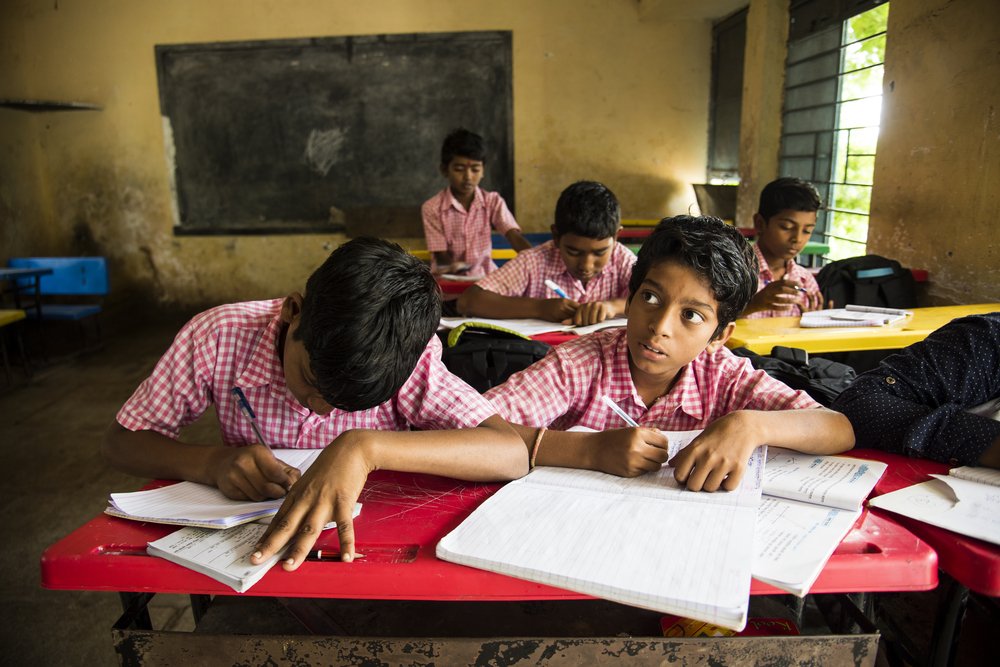
What is Education?
“Education in the general sense is a form of learning in which the knowledge, skills and habits of a group of people are transferred from one generation to the next through teaching training or research. Education is a preparing a person to face everyday life.”
If we see into the initial history of Indian (Hindu) society, we discover that in early India, education was showed on the gurukul system in which stress was located on the direct connection among the guru (teacher) and the sisya (pupil). The learner’s phase or the first stage of Early Indian Education was Brahmacharya.
Brahmacharya characterized the bachelor student period of life. This stage stress and focused on education and with the exercise of celibacy. The students would go to a Gurukul (house of the guru) and would live with a guru (teacher) to acquire information of science, philosophy, scriptures and logic, working self-discipline, working to get Dakshin (donation) to be salaried to the guru, and knowledge to live a life of Dharma.
Structure of Indian Education System
- Pre-school: Education at this level is not required. The Montessori system is especially widespread at the pre-school level
- Private playschools: Cookery for children between the ages of 18 months and 3
- Kindergarten: This is separated into lower playschool and upper kindergarten.
- Primary school: First to fifth normal/class/grade.
- Middle school: Fifth to eighth standard/class/grade (for 11- to 14-year-olds)
- Secondary school: Ninth and tenth standard/class/grade (for 14- to 16-year-olds)
- Higher secondary or pre-university: 11th and 12th standard/class/grade (for 16- to 17-year-olds). This is when students select a theoretical area on which to effort
- Undergraduate: A BA is a three-year degree. Specific courses such as medicine and engineering can be lengthier.
- Postgraduate: A 1-year course
Education in India
- Most first-class students get technical seats, some become Doctors and some Engineers.
- The Second Class pass and then get MBA become administrators and control the First Class.
- The Third-Class pass enters politics and becomes Ministers and control both.
- Last but not the least, The Failures join the underworld and control all the above.
- And those who do not attend any school become Swamis and Gurus and everyone to them
RECENT STATUS
India with more than a billion resident has the second largest education system in the world. According to the NSSO data for 2004-05, the number of out of school children in the age group 6-14 years was over 3 crores. According to NSSO data from the 66th round survey on employment and Unemployment in 2009-10,2.2 crores children in the age group, 6-14 years were not attending school. 26% of pupils in primary school drop out before Grade 5.
Today’s education system in India is challenging but needs some changes. The education system in India puts more emphasis on the theoretical knowledge than the practical. The quality of the education must be improved rather than the quantity.
If the Government takes action at least against some of the challenges mentioned above then the future of student can be improved to a better successful person.
Commenti,
Aggiunto 0 commenti